Steps to building a swimming pool in Mallorca: from the initial idea to commissioning
Building a swimming pool in Mallorca begins long before excavation work starts. The process involves assessing the site, defining how the pool will be used, checking the applicable regulations, preparing the design and selecting the technical systems that will ensure it operates correctly.
For this reason, the steps involved in building a swimming pool in Mallorca should be approached as part of a comprehensive project. It is not simply a matter of constructing the pool shell, but of creating an efficient, safe and easy-to-maintain space that is fully integrated into the property.
Working with a specialist company makes it possible to coordinate all technical and aesthetic decisions, from the initial concept through to filling and commissioning the pool. At Piscina & Jardín, we support property owners throughout the entire process with our bespoke swimming pool projects in Mallorca.
The process can be divided into several stages, from the initial definition of the project through to the pool’s commissioning:
| Stage | Decisions involved | Outcome |
|---|---|---|
| Initial definition | Use, size and priorities | Initial project outline |
| Feasibility study | Site, access and regulations | Project feasibility confirmed |
| Design | Shape, location and finishes | Visual and technical proposal |
| Planning permission | Documentation and administrative procedures | Authorisation to begin construction |
| Construction | Building work and installations | Completed swimming pool |
| Commissioning | Testing and adjustments | Pool ready for use |
1. Define how the pool will be used and establish the project priorities
The first step is to determine how the swimming pool will actually be used. Requirements will differ depending on whether the property is a family home, a country estate, a holiday villa or a boutique hotel.
A family pool may require wide steps, a shallow area and additional safety systems. In a holiday rental property, automation, durable materials and straightforward maintenance may be higher priorities.
At this stage, it is advisable to define:
- Who will use the pool regularly.
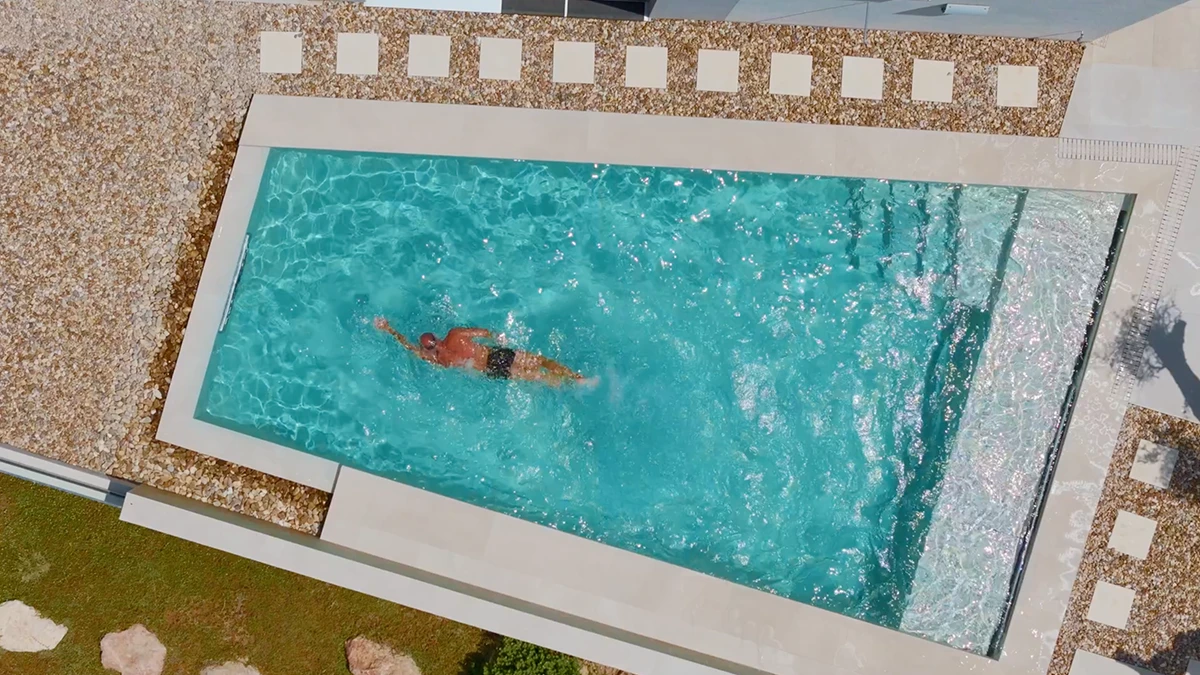
- Whether it will be used for bathing, swimming or relaxation.
- During which months of the year it will be used.
- The desired level of maintenance.
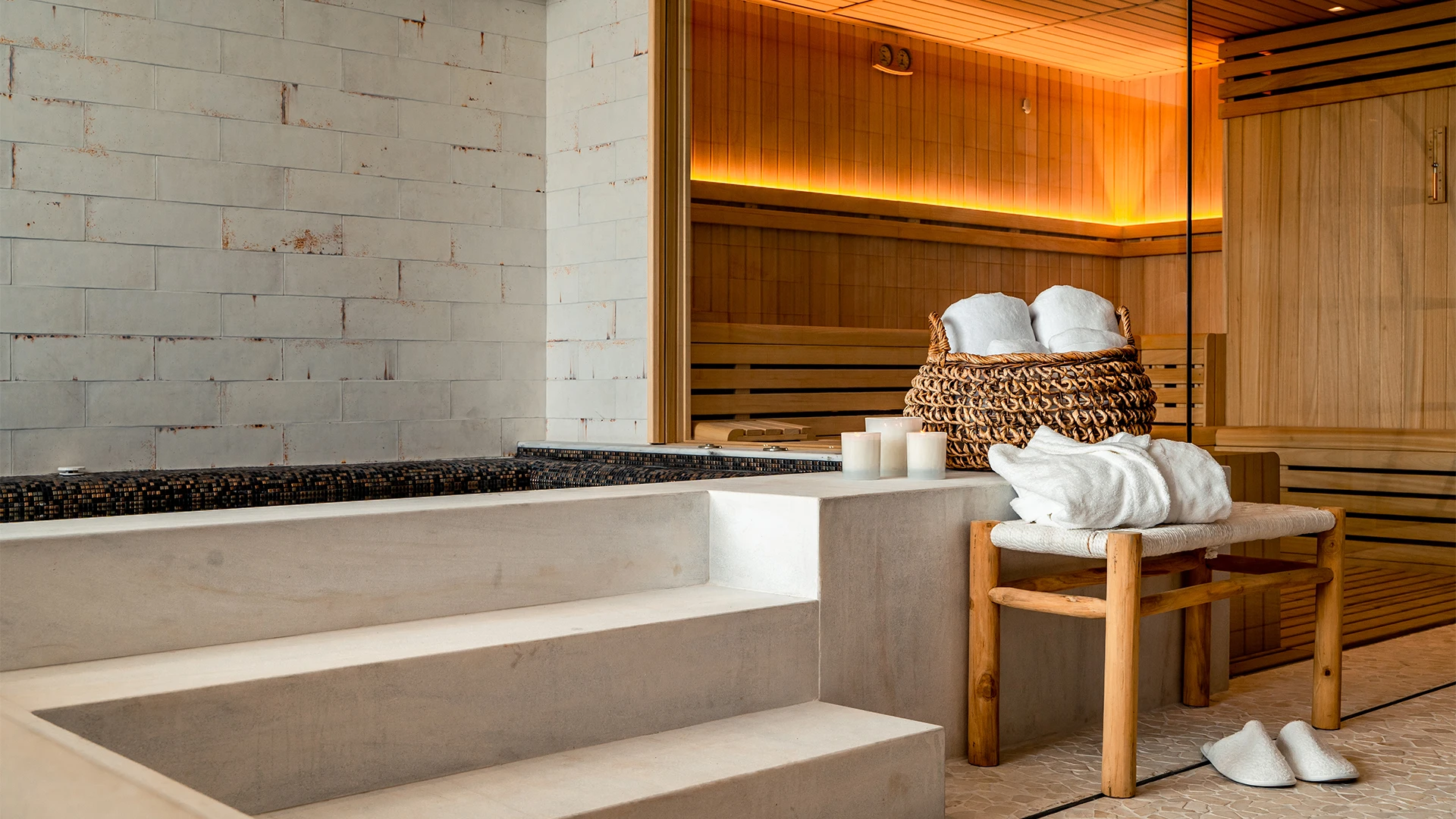
- Whether it should include a pool cover, heating or a wellness area.
- How it will connect with the terrace and garden.
Defining these requirements from the outset helps guide both the design and the investment appropriately. It also prevents changes from having to be made once construction is already under way.
2. Assess the feasibility of the site
Before finalising the design, the characteristics of the available space must be assessed. The surface area, slope, access, orientation towards the sun and type of ground can all influence both the location of the pool and the construction system used.
The relationship between the pool and the property should also be considered. A well-chosen location provides convenient access from the terrace, improves the views, makes the most of the hours of sunlight and protects the bathing area from the wind or neighbouring properties.
Access for construction machinery is another important consideration. A site with narrow entrances, significant changes in level or established landscaped areas may require specific planning.
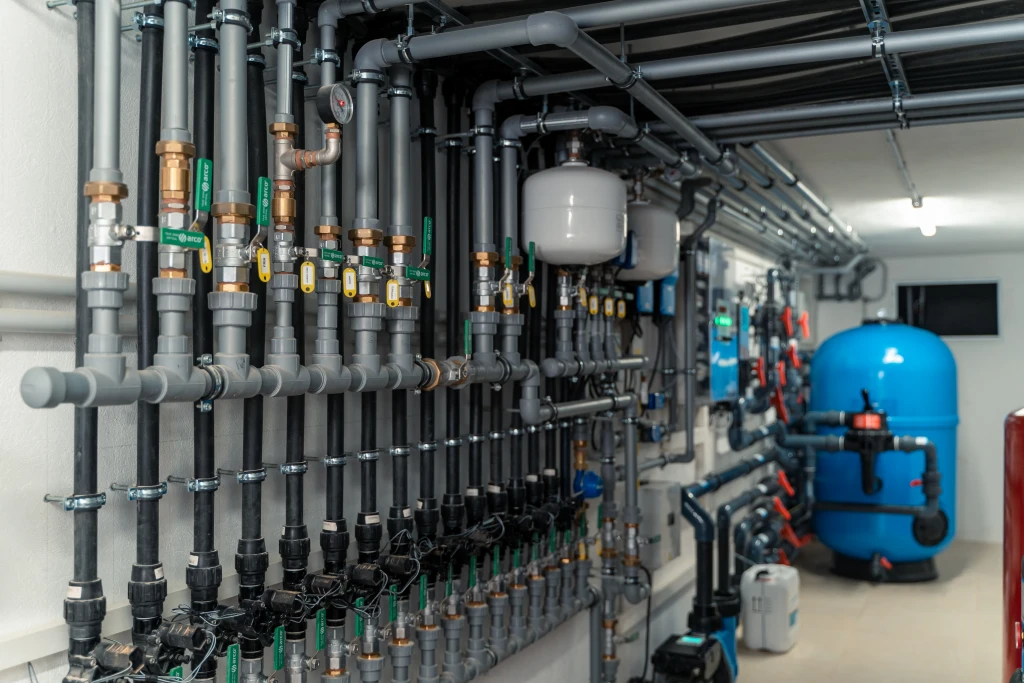
A suitable location must also be reserved for the plant room. The filtration and water-treatment equipment should be protected while remaining accessible for inspections, adjustments and repairs.
3. 3. Check the regulations and apply for planning permission
Building a swimming pool will usually require the relevant municipal planning permission and technical documentation. The specific requirements may vary according to the municipality, the land classification and the characteristics of the site.
The administrative process for a property on urban land will not be the same as for a country estate on rural land or a property situated in a protected area. Every project must therefore be assessed individually.
The technical team should check matters such as the required distance from the site boundaries, permitted site coverage, ground conditions and any applicable planning or environmental restrictions.
Piscina & Jardín provides a swimming pool project planning and regulatory service in Mallorca, including technical advice, project preparation and management of the required documentation.
Technical and planning feasibility must be confirmed before construction begins, as incomplete administrative procedures can result in work being suspended, changes having to be made or difficulties obtaining legal approval for the installation.
4. 4. Design a swimming pool that is fully integrated into the property
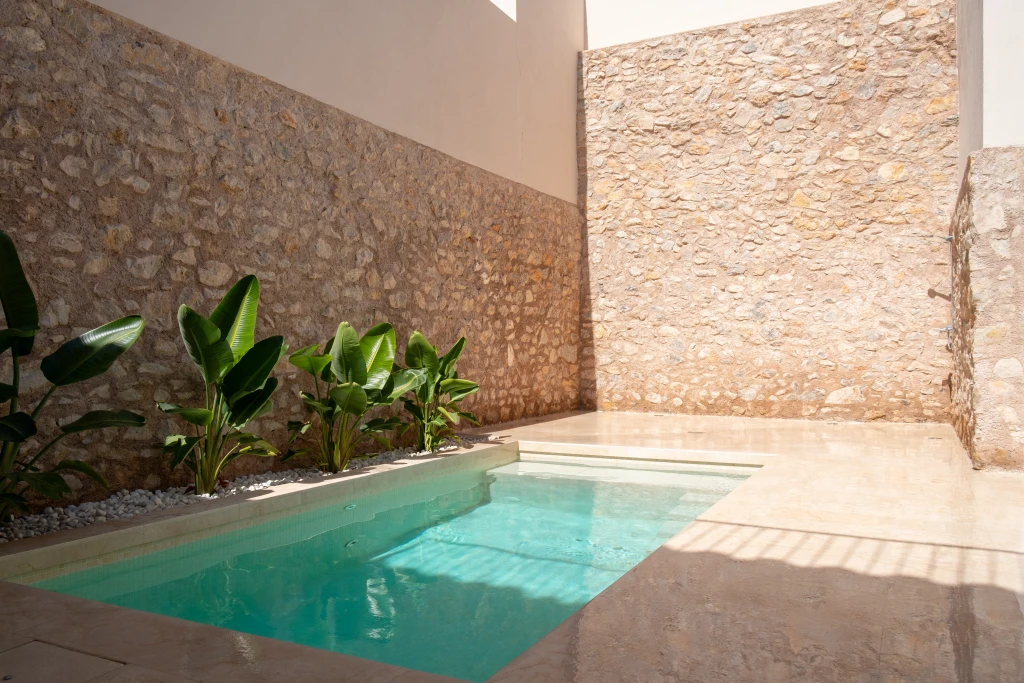
Once feasibility has been confirmed, the design stage begins. This is when the pool’s shape, dimensions, depth, access points and finishes are defined.
A decision must also be made as to whether the pool will feature an overflow, infinity edge or skimmer system, as well as where the steps, built-in seating, beach areas and hydrotherapy features will be positioned.
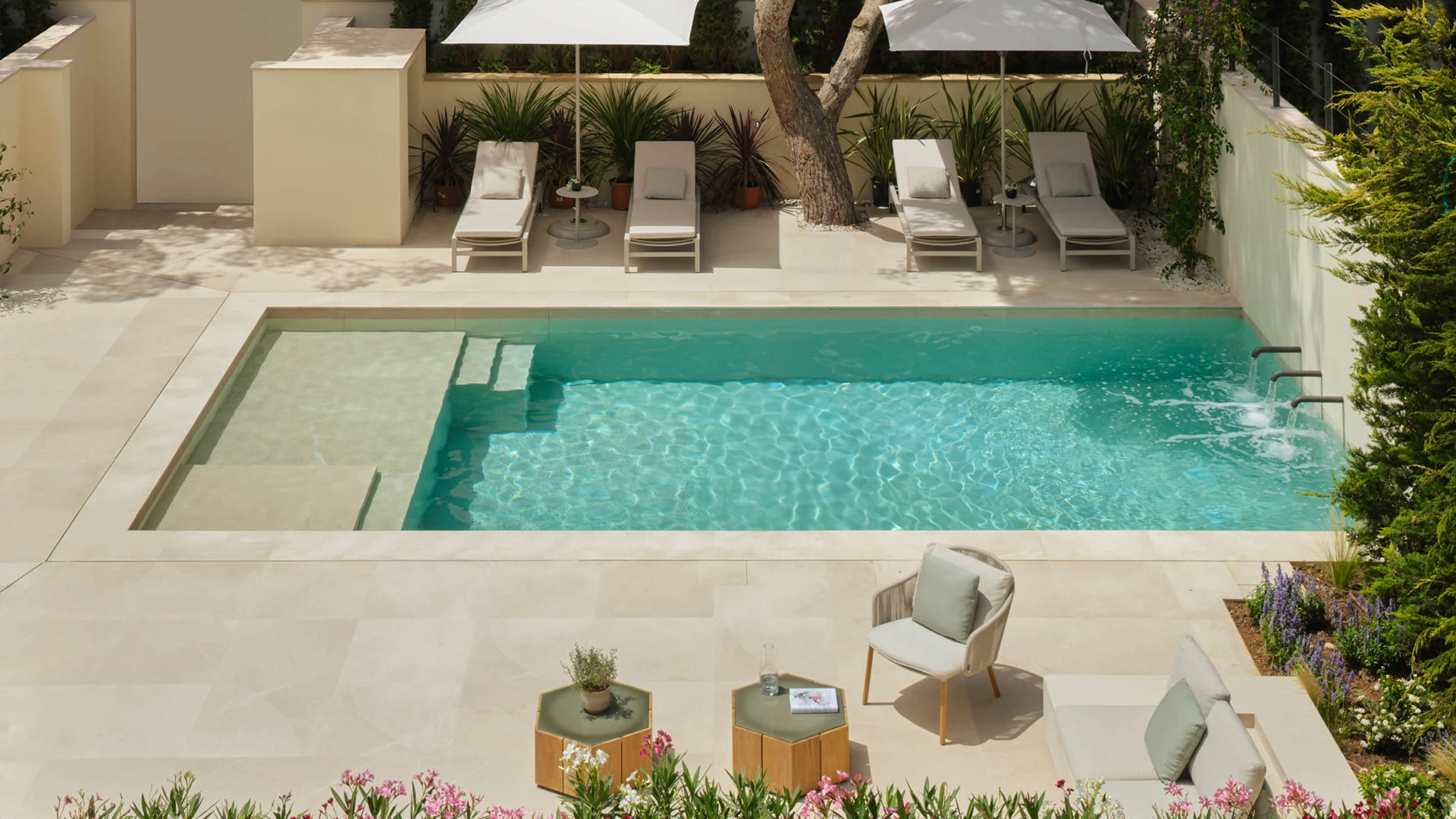
The design should consider the entire outdoor space:
- Its relationship with the architecture of the property.
- Integration with the garden and planting.
- Slip-resistant pool surrounds.
- Shaded areas and relaxation spaces.
- Underwater and ambient lighting.
- Privacy and the orientation of the views.
- Access to and location of the technical equipment.
For Piscina & Jardín’s bespoke swimming pools, the design is developed alongside the hydraulic engineering and the selection of heating, water-treatment and automation systems.
Renders and 3D models make it possible to visualise the proportions, compare materials and assess how the pool will integrate with the property before construction begins.
5. Select the materials and technical systems
Materials should be selected with appearance, safety and durability in mind. In Mallorca, factors such as exposure to sunlight, humidity, limescale and the saline environment found in certain areas can influence this decision.
The choice of materials applies to the interior finish, external paving, coping and decorative features. Natural stone, technical porcelain, glass mosaics and sand-coloured finishes are among the most commonly used options.
The pool also requires a correctly sized technical installation. The project should specify the pump, filter, pipework, return inlets, disinfection system and electrical control panel.
Before construction begins, it is also advisable to decide whether the pool will include:
- Automatic water treatment.
- Saltwater chlorination or UV systems.
- Variable-speed pumps.
- LED lighting.
- Remote system control.
- Pool heating.
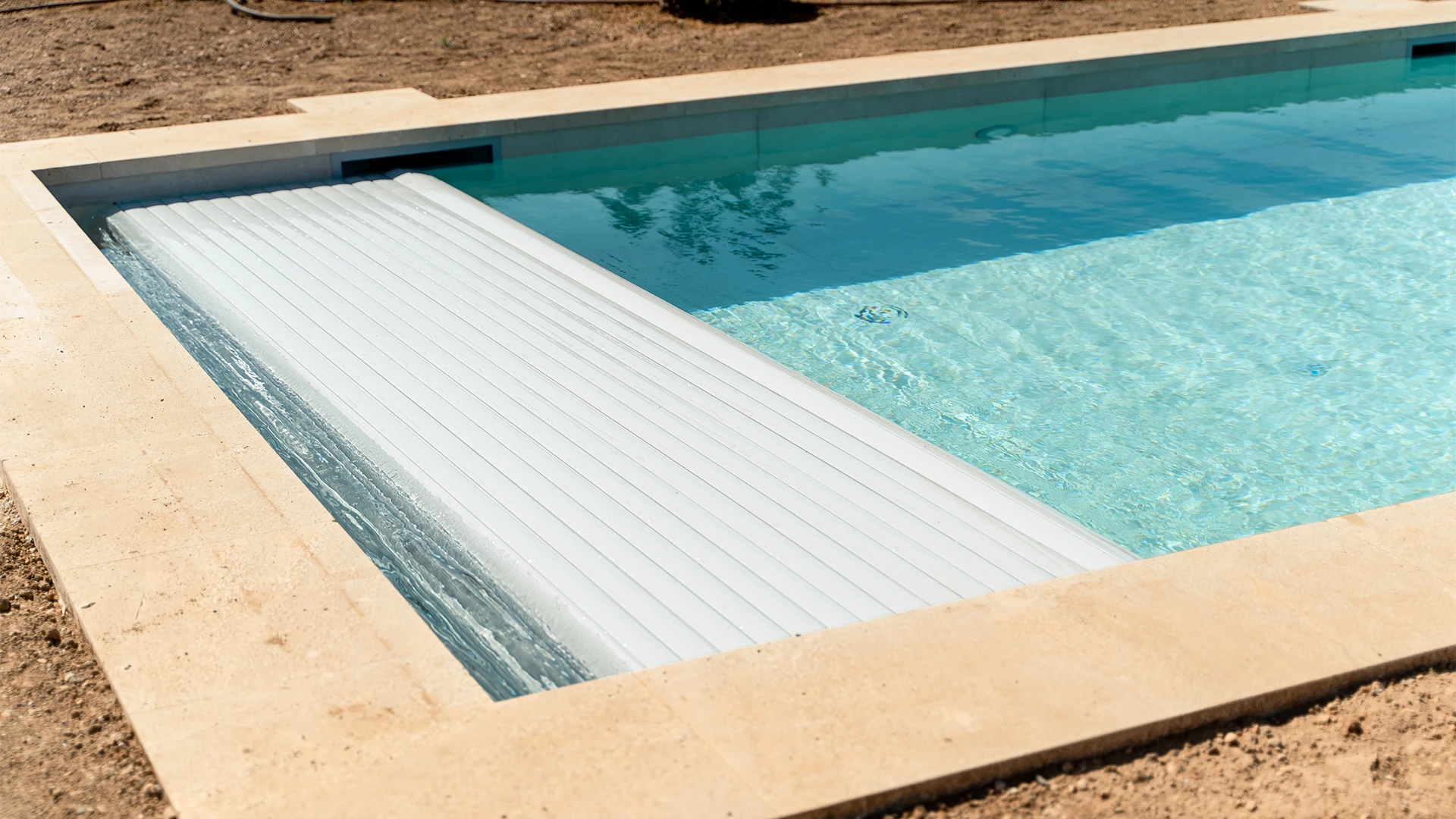
- An automatic pool cover.
- Safety systems.
Heating, pool covers and automation systems are easier to integrate when they have been considered during the design stage, as they may require dedicated spaces, connections or mechanisms.
6. Finalise the budget and plan the construction work
The quotation should clearly detail all the work, materials and equipment included. Comparing final prices alone can be misleading when the proposals include different systems, finishes or levels of automation.
The elements that should be clearly specified include construction of the pool shell, the interior finish, hydraulic installation, plant room, lighting and external finishes.
The quotation should also state whether the project includes planning permission, earthworks, waste removal, commissioning, heating, a pool cover or initial maintenance.
A detailed quotation makes it easier to coordinate the different stages and reduces the risk of unforeseen work arising during construction.
The schedule should take into account administrative timescales, material availability and any other work being carried out on the property or in the garden. When the pool needs to be ready by a particular date, it is advisable to begin planning sufficiently far in advance.
7. Coordinate the construction and technical installations
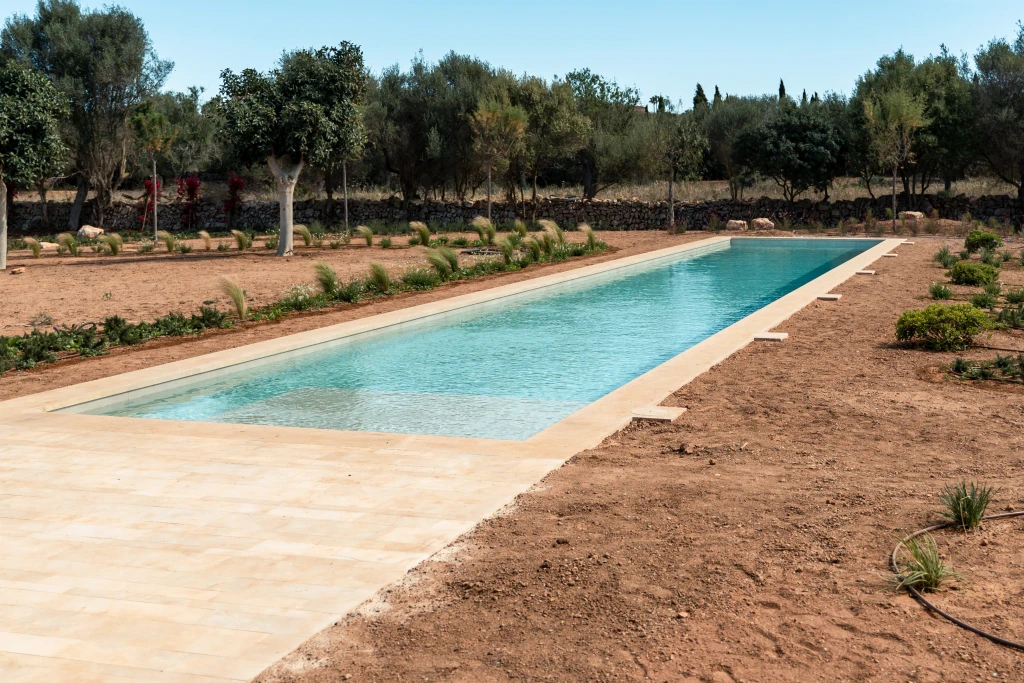
During construction, the pool is set out and the excavation, structural work, waterproofing, interior finish and external finishes are completed. At the same time, the pipework, hydraulic components and technical equipment are installed.
Although the property owner does not need to understand the details of every procedure, it is important to have a project manager or technical team capable of coordinating all the work.
The hydraulic installation must be completed in accordance with the design of the pool shell and the position of the plant room. Any changes made during construction can affect water circulation, energy efficiency or access to the equipment.
A swimming pool combines structural, hydraulic and electrical systems. Professional coordination between these areas reduces errors and prevents responsibilities from being divided among different contractors without anyone maintaining an overall view of the project.
8. Carry out testing and commissioning
The swimming pool is not complete when the finishing work ends. Before handover, the watertightness, water circulation, filtration, treatment and lighting systems must all be tested.
Once the pool has been filled, the initial water parameters are adjusted and the automatic systems are configured. Where the pool includes heating or a cover, these systems must also be checked.
The property owner should receive a clear explanation of:
- How the filtration system works.
- How to monitor the water-treatment system.
- How to programme the equipment.
- How to use the pool cover or heating system.
- Basic cleaning tasks.
- How frequently technical inspections are required.
Commissioning should also include the handover of the operating instructions, warranties and settings for the installed equipment, so that the owner understands how to use the pool and when to request a professional inspection.
Maintenance is also part of the project
A well-built swimming pool requires regular maintenance to keep the water, finishes and equipment in good condition.
Ease of maintenance largely depends on the decisions made during the design stage. An accessible plant room, correctly sized filtration equipment and an automatic treatment system reduce the need for manual intervention and make day-to-day management easier.
Piscina & Jardín provides a swimming pool maintenance service in Mallorca, offering preventive maintenance plans, seasonal servicing and assistance in the event of a fault.
Regular inspections make it possible to check the water parameters, pump operation, filter condition and configuration of the automatic systems. They also help identify minor issues before they develop into more complex repairs.
Professional support from the initial idea onwards
The steps involved in building a swimming pool in Mallorca extend far beyond the construction work itself. They include assessing the site, checking the regulations, preparing the design, selecting the equipment, completing the construction and commissioning the pool.
Approaching these decisions from an overall perspective makes it possible to create a swimming pool that is fully integrated into the property, adapted to its users and designed to operate efficiently.
Piscina & Jardín supports its clients throughout the entire process by delivering turnkey projects. From the initial proposal through to ongoing maintenance, the property owner has a single specialist team responsible for coordinating the project.